The Committee of Correspondence 

Guardians of the Republic.
 Then. Now. Always. 

A Proven Instrument of Liberty 

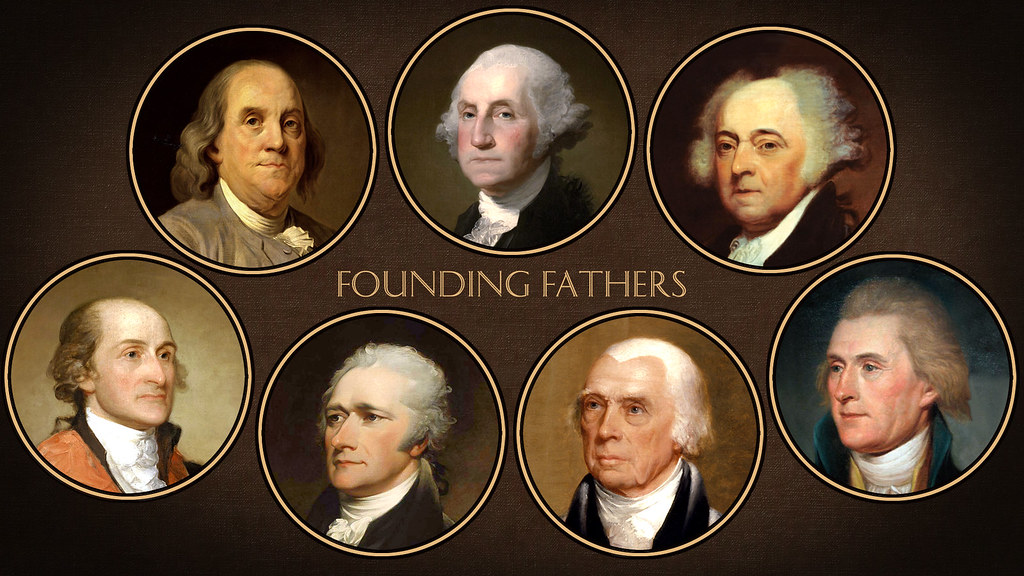
In the years preceding American independence, the future of the colonies did not hinge on armies alone. It depended on communication; deliberate, disciplined, and principled. Beginning in 1764, the Committees of Correspondence emerged as a decisive force among the colonies. These committees formed a trusted network of leaders who exchanged intelligence, clarified truth, aligned action, and unified purpose across great distance and growing danger.

Through letters carried by hand, riders, and ships, the Committees: 

Prepared the ground for self-government
Exposed abuses of power
Preserved colonial unity
Coordinated lawful resistance
Anchored the people to first principles


They operated with restraint and seriousness, bound by duty rather than display, and guided by the enduring belief that a free people must remain informed and united to remain sovereign.  Their work ensured that when independence was declared, the colonies stood prepared to form a  republic; coherent in purpose, aligned in principle, and resolute in defense of liberty. 

A Modern Continuation of a Historic Doctrine 

The modern Committee of Correspondence stands as a direct continuation of the original doctrine, adapted to the demands of the present age while anchored firmly in first principles. The Committee is constituted as a focused body of trusted individuals, selected for their ability to communicate with clarity, discretion, and strategic purpose. 

Its work centers on: 

Coordinated and disciplined communication
Strategic alignment of information
Preservation of institutional memory
Continuity of purpose across time and circumstance
Fidelity to constitutional order and republican self-government

Participation is extended by invitation only, reflecting the gravity of the mission and the trust required to carry it forward. 


Prestige, Duty, and Discipline 

Service within the Committee of Correspondence is a mark of confidence earned through  character and demonstrated responsibility.

Members are selected for: 

∙Proven Integrity
∙Sound judgment
∙Operational discretion
∙Commitment to the Republic above personal interest
∙The capacity to communicate truthfully, precisely, and with restraint 

The Committee functions under rigorous standards of conduct, emphasizing unity, discipline, and accountability. The measure of success is not visibility, but effectiveness; not acclaim, but continuity. The charge is singular: to safeguard the Republic through principled coordination and informed action.

Leadership

The Committee of Correspondence is chaired by​ Lieutenant General Michael T. Flynn (Ret.) General Flynn brings decades of experience in national security, intelligence, and strategic coordination at the highest levels of public service. His leadership reflects a steadfast commitment to:
Constitutional sovereignty
Lawful self-governance
Institutional accountability
Strategic clarity in complex environments
Under his chairmanship, the Committee operates with the seriousness, discipline, and moral weight befitting its historical lineage.

The Charge

The original Committees of Correspondence helped give rise to a nation grounded in liberty and law. This Committee exists to ensure that the Republic endures. Those entrusted with this responsibility serve with humility, discretion, and a clear understanding that the preservation of self-government is neither automatic nor guaranteed. The Republic was established through vigilance and resolve.​ It is preserved by the same.
We, entrusted with the confidence of this Committee, do solemnly acknowledge that the preservation of a free Republic depends not upon force alone, but upon vigilance, virtue, and the faithful exchange of truth. We accept this charge with humility, mindful that liberty is neither self-sustaining nor secure without the deliberate stewardship of those willing to place duty above interest, and principle above convenience. We pledge to uphold the Constitution of the United States as the supreme civil charter of this Republic, to defend its original meaning, and to resist all encroachments that would weaken the sovereignty of the people or dissolve the bonds of lawful self-government. We commit ourselves to disciplined correspondence, measured in word, prudent in disclosure, and steadfast in purpose, understanding that unguarded speech may imperil the whole, while faithful communication preserves the many. We shall conduct ourselves with discretion and restraint, neither seeking recognition nor yielding to fear, knowing that the quiet labor of coordination has ever been the safeguard of liberty in times of uncertainty. We affirm that our allegiance is owed not to faction, ambition, or power, but to the enduring principles upon which this Republic was founded: ordered liberty, equal justice, and government accountable to the people. In accepting this charge, we bind ourselves to one another in trust, to this Committee in duty, and to posterity in responsibility, resolved that the Republic entrusted to us shall endure, unaltered in principle, unbroken in spirit. So pledged, we commit ourselves to the work before us.